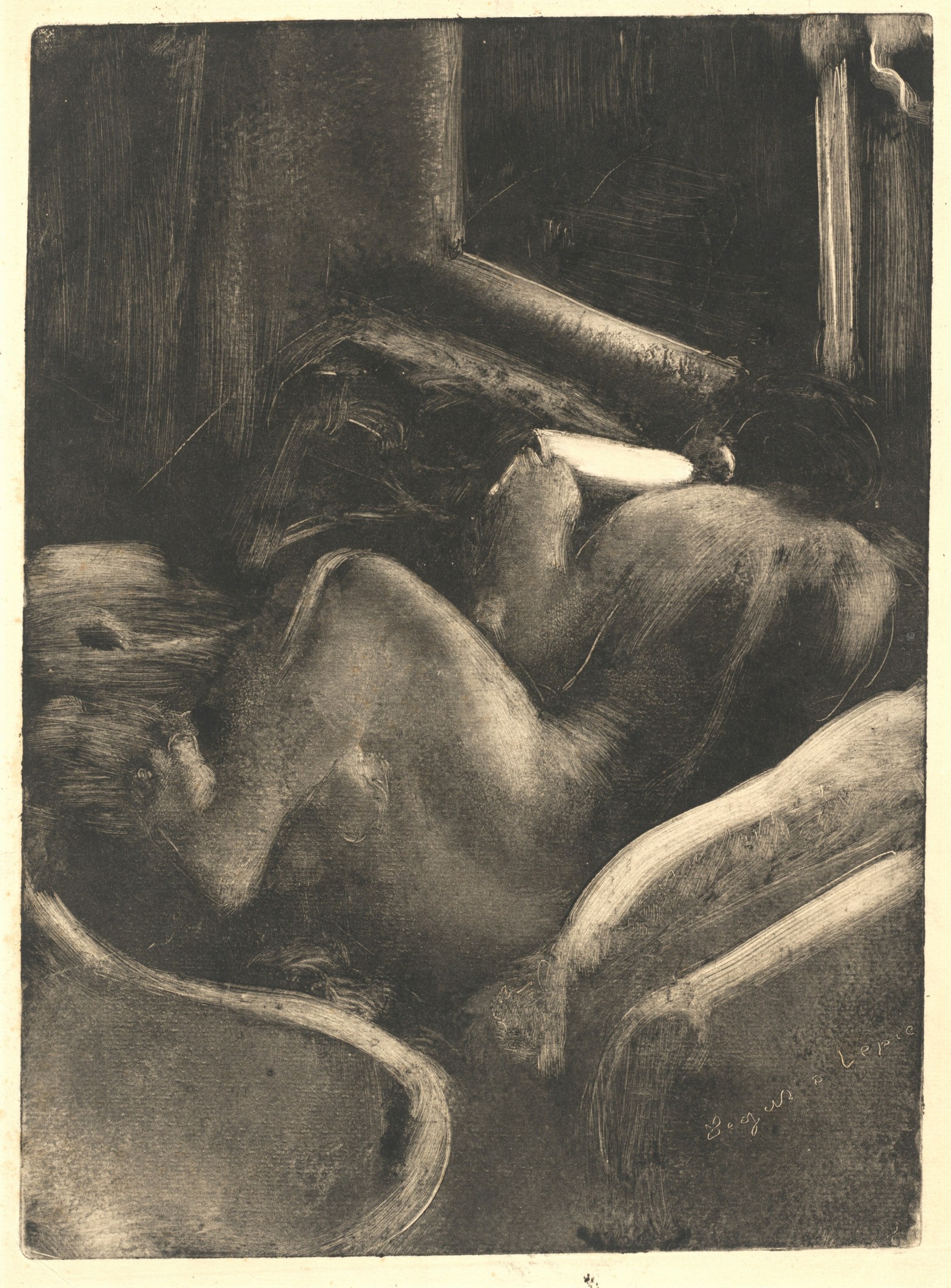
Monotype printing, a hybrid between painting and printing, has been used for centuries as a unique style of printmaking. It involves painting an image onto a non-absorbent plate and then transferring it onto paper. The drawing must be spontaneous and quick and as the pigment is not absorbed onto the plate, it can be applied instinctively, by brushing or smearing and areas can be removed.
The first monotypes were created by Castiglione in the 17th century (Fick and Grabowski, 2015: 189) and used by such artists as Matisse and Gauguin. None have explored the technique with as much enthusiasm as Edgar Degas, however.
Little was known about monotypes in Degas’ time and it is probable that he invented his process (Hayward Gallery, 1985:6). Degas would go on to make some 250 monotypes but only publicised a few in his lifetime, perhaps indicating that they were a form of sketch and not the finished article.

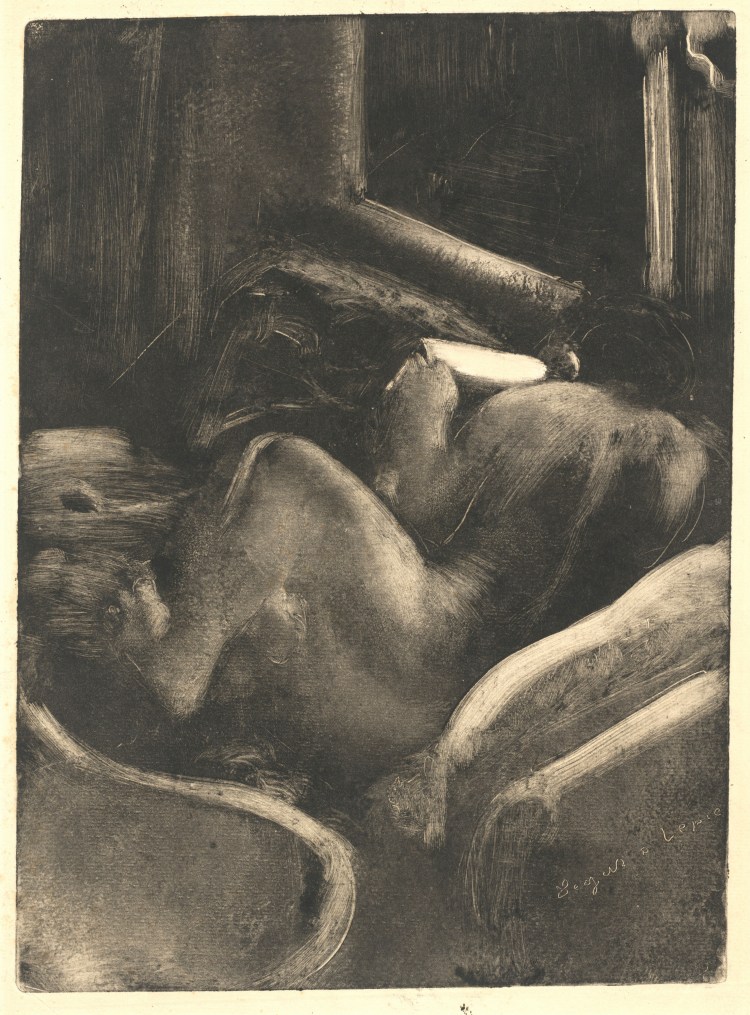
Unlike Degas’ usual draughtsmanship, his monotypes show a looser style, often with distortions, indicating the spontaneity with which it was created (see Fig. 2). He applied ink or oil pigment directly onto the plate with a brush, creating tonal variation with turpentine dilutions (Hayward Gallery, 1985:7). He also applied pigment to the whole plate and removed the lighter areas using a variety of tools including rags, hard brushes, sticks etc. creating a variety of marks and textures (referred to as dark field while the former is light field (Edgar Degas: A Strange New Beauty, 2016)).
His light field monotypes are more conventional in style (if not subject). The dark field prints are more experimental with captivating textures. His later landscape monotypes are quite abstract, showing his wish to reduce and simplify the scene before him (see Fig 3).
Figure 3. Le Chemin Montant (c. 1878-1880)
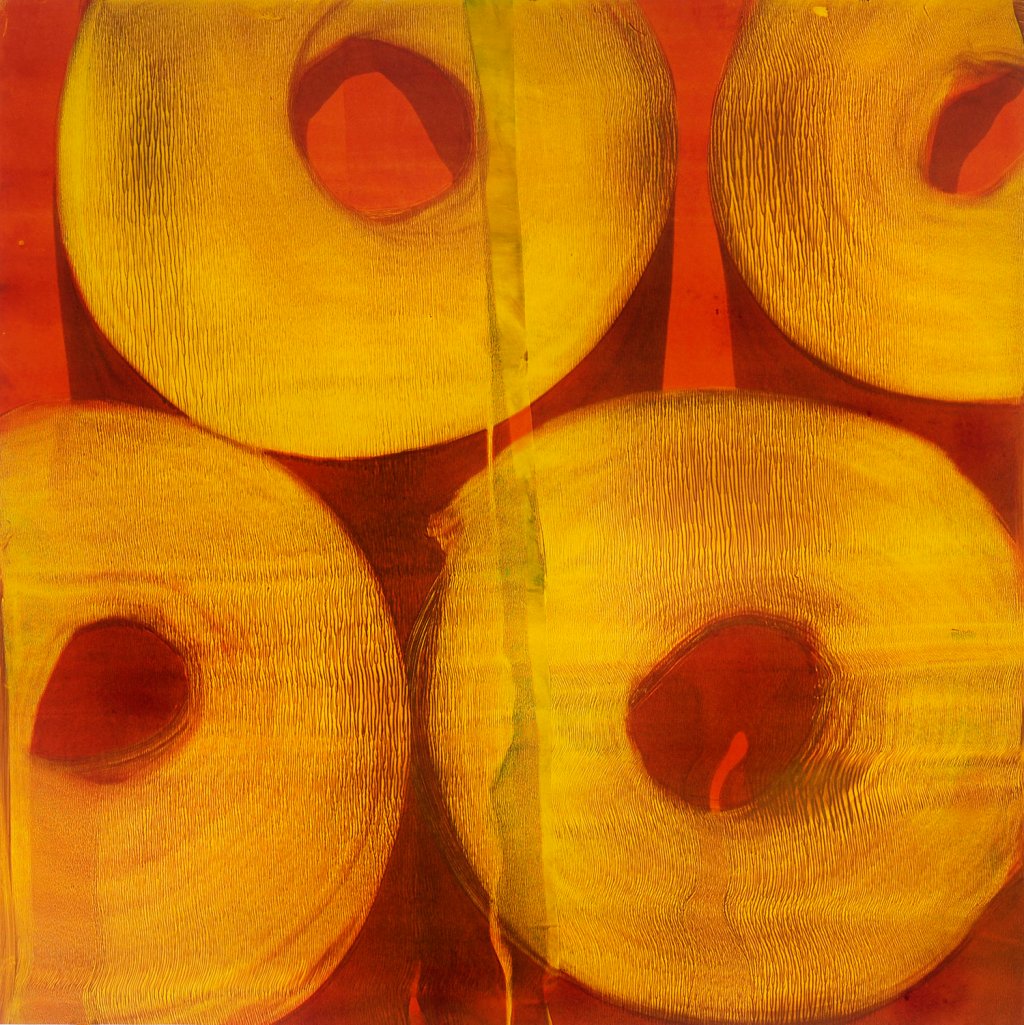
The American artist, Marylyn Dintenfass also makes monotypes but they are vastly different to Degas’. Dintenfass uses vibrant colours and repeating motifs, drawing inspiration from architecture, such as the Oculus in the Pantheon (Marylyn Dintenfass: Oculus, 2015), or classic cars and music from the same era (Edelman, A. 2011). Her work also explores scale, her images concurrently regarded as microscopic or macroscopic (Marylyn Dintenfass Interview with Irving Sandler Part1, 2009) (see Fig 3).
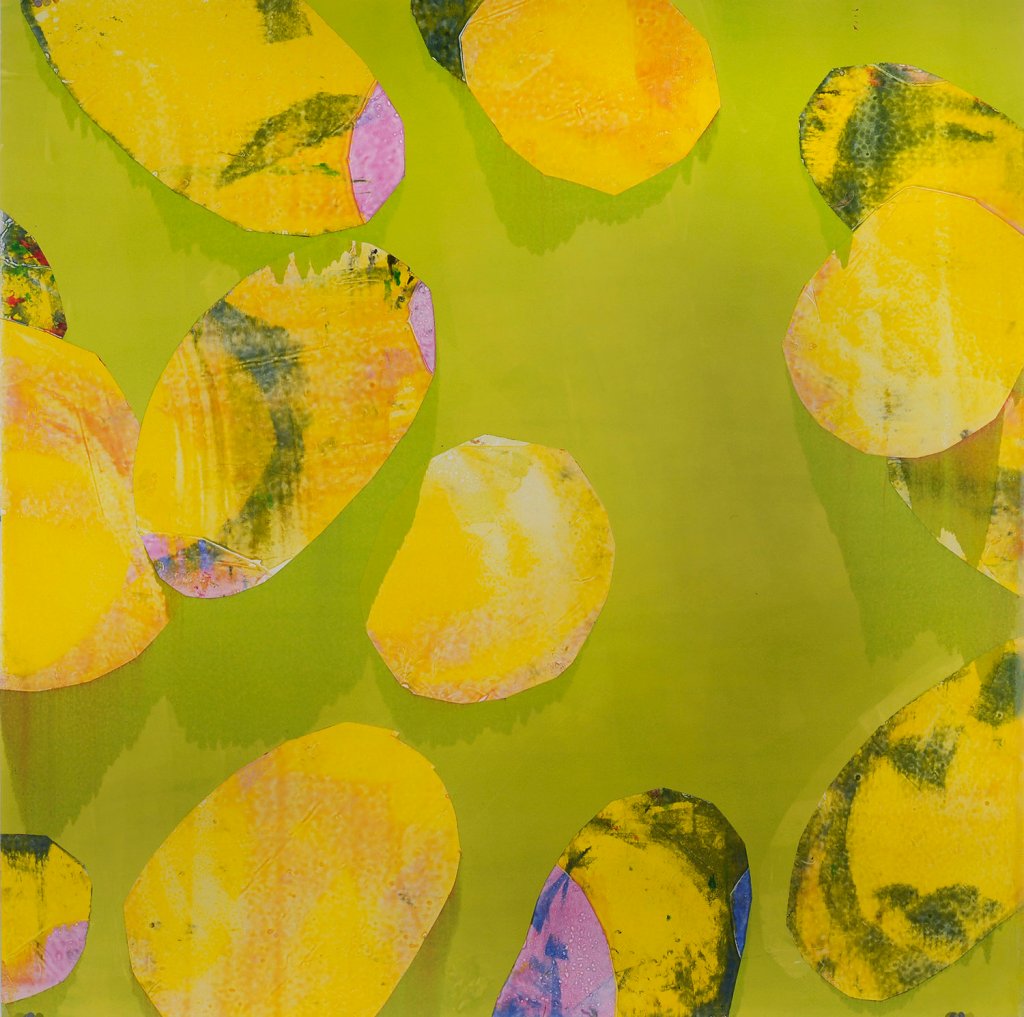
Her process is very instinctual and quite unconventional. When painting, she applies layers of oil paint rolling it on and removing other parts, allowing colours to shine through (Marylyn Dintenfass: Oculus, 2015) (see Fig. 5). This technique transfers well into monotype as a form of dark field process. Transparency is key to her work (Marylyn Dintenfass in conversation with Natasha Schlesinger, 2017) and colours are the “characters in her narrative” (Stetson, N. 2011). Writer Lilly Wei describes Dintenfass’ use of colour as “the record of the construction of the painting in which each layer is visible” (Edelman, A. 2011).
Despite their very different subjects and outcomes, both Degas and Dintenfass work spontaneously into the pigment, smearing and using unusual tools to create intriguing marks, which, although on different scales, are similarly conceived. Dintenfass works in colourful layers whereas Degas took one pass, working on the plate in a more painterly way, generally in black or muted colours.
Degas’ monotypes are subdued and quiet, the atmospheric shadows giving the impression of low lighting in a cosy room. In contrast, I find Dintenfass’ work energizing and exciting. Her vivid colours react with each other provoking an electric reaction, stimulating me to recreate her tactile smears with thick paint. Her appropriation from architecture and mechanics, such as the oculus or the organic forms of classic cars, is an attractive idea.
List of Illustrations
Fig 1. Degas, Edgar (c. 1880s) In the Salon. [Monotype in black ink on cream laid paper] At: https://www.clevelandart.org/art/1977.44 (Accessed on 28/02/25)
Fig 2. Degas, Edgar (c.1885) Woman Reading (Liseuse). [Monotype in black ink on cream laid paper] At: https://www.nga.gov/collection/art-object-page.39227.html (Accessed on 14/04/20)
Fig 3. Degas, Edgar (c. 1878-1880) Le Chemin Montant. [Monotype] At: https://collections.mfa.org/objects/77185 (Accessed on 14/04/20)
Fig 4. Dintenfass, Marylyn (2009) Solstice. [Oil on Paper, Monotype] At: https://www.marylyndintenfass.com/works-on-paper#/parallel-park/ (Accessed on 14/04/20)
Figure 5. Dintenfass, Marylyn (2009) Caprice Classic. [Oil on Paper, Monotype] At: https://www.marylyndintenfass.com/works-on-paper#/parallel-park/ (Accessed on 14/04/20)
Bibliography
Edgar Degas: A Strange New Beauty (2016) [Exhibition Video] At https://www.moma.org/calendar/exhibitions/1613 accessed on 03/03/2020
Edelman, Aliza (2011) Marylyn Dintenfass: Parallel Park Massechusetts: Hard Press Editions
Fick, B and Grabowski, B (2015) Printmaking: A Complete Guide to Materials and Processes (2nd Ed) London: Lawrence King Publishing Ltd
Hayward Gallery (1985) Degas’ Monotypes Hayward Gallery 15 May-7 July Exhibition guide London: Arts Council of Great Britain
Marylyn Dintenfass in conversation with Natasha Schlesinger (2017) [Interview Video] at https://www.marylyndintenfass.com/press accessed on 04/03/20
Marylyn Dintenfass Interview with Irving Sandler Part1 (2009) [Interview Video] at https://www.marylyndintenfass.com/press accessed on 04/03/20
Marylyn Dintenfass:Oculus (2015) [Exhibition Video] At https://news.artnet.com/market/marylyn-dintenfass-oculus-driscoll-333217 accessed on 04/03/20 Stetson, N (2011) ‘Colour Queen’ In: Florida Weekly, Arts and Entertainment Jan 19 to 25th p C4
 Kim Appleton Art & Framing